
The Iron Rod and Steel Distributors Employers Union of Nigeria (IRSDEUN) has urged the Nigerian government to dissolve the Standards Organisation of Nigeria (SON).
The union blamed the agency for failing to curb the widespread use of substandard building materials that contribute to frequent building collapses across the country.
Speaking at a press briefing on Tuesday, IRSDEUN’s National President, Chief Gbenga Awoyale, accused SON of negligence, particularly following its recent reversal of a decision to shut down 18 companies allegedly involved in the production and distribution of substandard iron rods.
vThe reversal, reportedly influenced by the Ministry of Trade and Industry, has sparked concerns over regulatory compromise and the government’s commitment to enforcing quality standards.
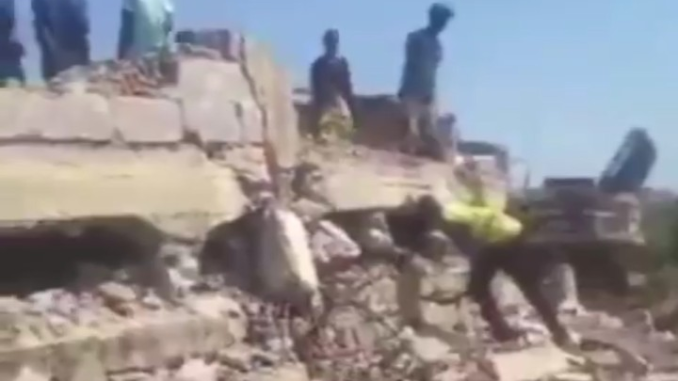
Awoyale lamented the devastating human and economic losses caused by poor-quality materials in the construction sector, citing at least three fatal building collapses recorded in different states within January 2025 alone.
He described the incidents as “avoidable tragedies” and called for urgent reforms, including the dissolution of SON and the establishment of a more transparent and accountable regulatory body.
“The continued tolerance of substandard materials is a death sentence for innocent Nigerians. SON has failed in its mandate, and if the government is serious about protecting lives, it must take decisive action,” Awoyale stated.
According to Awoyale, “This is a national embarrassment and a clear indication that the regulatory bodies are failing in their duties,” Awoyale stated.
“The government must take decisive action to prevent further loss of lives and property. Dissolving SON and restructuring the regulatory framework is the only way to ensure accountability and enforce standards.”
He further explained that the Act establishing SON includes a provision mandating the prosecution of companies found guilty of producing substandard materials.
However, he lamented that this law is rarely enforced due to corruption and collusion between some SON officials and unscrupulous manufacturers.
“There is a section in the Act that established SON which stipulates the prosecution of any company found wanting in the production of substandard materials. Unfortunately, this law is not being implemented. Some corrupt officials within the system allow these perpetrators to buy their way out, thereby perpetuating this dangerous cycle,” Awoyale explained.
The union had made a similar appeal in 2024, but no concrete action was taken by the government.
Awoyale lamented that the lack of effective oversight has allowed unscrupulous companies to continue producing substandard materials, which are sold domestically, while higher-quality products are exported to neighbouring countries with stricter regulations.
“The current system is flawed. These companies exploit weak enforcement mechanisms to flood our markets with inferior products, putting lives at risk. Meanwhile, they export standard materials to countries where they know they cannot cut corners,” he said.
The recurring issue of building collapse in Nigeria has been attributed to the use of substandard materials, poor construction practices, and inadequate enforcement of building codes.
According to data from the Building Collapse Prevention Guild, Nigeria recorded 47 building collapses across 14 states in 2024, with Lagos State accounting for about 56% of them through 13 incidents, followed by Abuja with 4.37%, having recorded six collapse incidents.
Stakeholders in the construction industry have echoed the union’s call for urgent reforms.
They argue that dissolving SON and establishing a more robust regulatory body with greater autonomy and enforcement powers is critical to addressing the root causes of the problem.
Awoyale’s position has been further affirmed by recent revelations from the House of Representatives Committee on Steel Development.
The committee, through its Chairman, Zainab Gimba, during an interactive session with the Nigerian Society of Engineers, disclosed shocking findings, including the production of iron rods with significantly reduced diameters, such as 7.56 mm rods being sold as 10 mm and 9.25 mm rods as 12mm.
The committee also lamented the brazen transportation of fake iron rods in broad daylight, underscoring the failure of supervising agencies to curb the menace.
This revelation aligns with Awoyale’s assertion that regulatory bodies are complicit in the proliferation of substandard materials.
As the debate continues, Nigerians are urging the government to take swift and decisive action to prevent further tragedies. The dissolution of SON, according to Chief Awoyale, is not just a necessary step but a moral obligation to protect the lives and properties of citizens.
“The time for empty promises is over. We need action now. The government must prioritize the safety of its people over the interests of a few unscrupulous businesses,” Awoyale concluded.
The call for SON’s dissolution has reignited discussions about the need for comprehensive reforms in Nigeria’s construction and regulatory sectors.
Previously, SaharaReporters reported that the number of casualties from the collapsed two-storey building under construction at Northern Vulture Estate, Chevron in Lagos State had risen to three, with six others rescued alive.
Dr. Olufemi Damilola Oke-Osanyintolu, Public Relations Officer of the Lagos State Emergency Management Agency (LASEMA), confirmed the update on Wednesday. He stated that a 15-year-old boy and an adult male were recovered dead.
“A young boy, about 15 years old, and an adult male recovered, were confirmed dead and subsequently bagged by emergency responders and handed over to SEHMU officials. Also, six victims were rescued alive and attended to by the medical team.
“The collapsed building has now been completely demolished and reduced to ground level using the agency’s heavy-duty equipment. Search and rescue operations have officially been concluded,” the statement had added.