
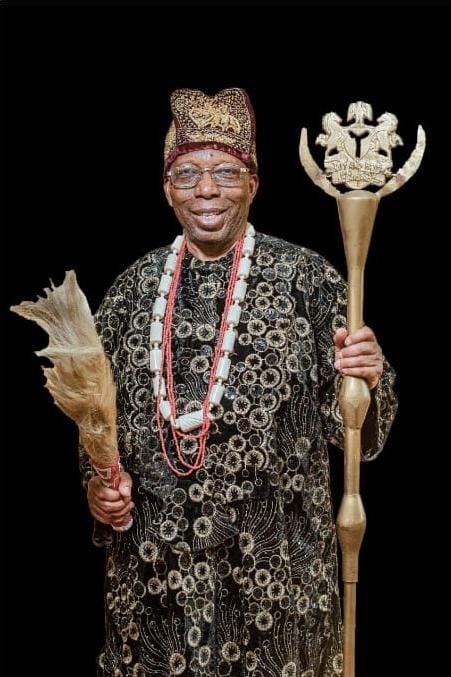
By Chief Victor Mbalewe
IN Uvuru, an ancient community in Nigeria’s Aboh-Mbaise Local Government Area of Imo State, the enthronement of His Royal Highness Eze Sir Iheanacho Chinyereze Mbalewe, Eze Oha III, is more than a return to tradition – it is a strategic investment in the future of peace and security of the community
Under his leadership, Uvuru Autonomous Community has embraced a vision that places youth empowerment at the centre of its development and peacebuilding agenda, recognising that peace is not merely the absence of conflict but the presence of opportunities to improve the community.
A Vision Rooted in Service and Inclusion
Eze Oha III’s reign builds on the legacy of his father, HRH Eze Reuben Ugwuegbulem Mbalewe, whose stewardship of the old Uvuru Ikedinairi Kingdom was marked by stability, measured governance, and community cohesion. Today, Eze Oha III stands at the intersection of tradition and modern community leadership, pursuing initiatives that engage Uvuru’s youth not as spectators of peace but as active architects of prosperity and security.
In the lead-up to his coronation on 27 December 2025, the Eze Oha III launched a youth training and economic empowerment programme, designed to equip young people with practical skills and opportunities to become business owners, job creators, and responsible contributors to prosperous communal life. This initiative, underpinned by transparent selection and careful community collaboration, marks more than charity, it represents strategic peacebuilding.
Why Youth Empowerment Matters for Peace and Security
The argument for youth empowerment as essential to peace and security is backed by extensive research across Nigeria and beyond:
a. Youth Employment and Reduced Violence Scholars have identified high youth unemployment as a key factor associated with crime and violence in Nigerian communities. Unemployment among young people is linked to increased insecurity and instability, as frustrated and economically marginalised youth are more susceptible to restiveness and unlawful activities. Empowerment efforts that provide skills, education, and economic opportunities have been cited as critical measures to reverse this trend and contribute to peace and security in Nigerian communities. Richtmann+1 (https://www.richtmann.org/journal/index.php/mjss/article/view/8717?utm_source=chatgpt.com)
b. Youth as Peacebuilders
Research on peacebuilding in post-conflict communities in Nigeria shows that young people are already engaged in informal peacebuilding activities – such as dialogue facilitation and community mediation – but their impact is limited without structured empowerment and support. Studies recommend intentional inclusion of youth in formal peace and security mechanisms with capacity building, training, and funding support. This aligns closely with Eze Oha III’s empowerment template, which anticipates engagement of youth in community decision-making and economic development. Advance Scholars Publications (YOUTH INVOLVEMENT IN PEACEBUILDING: A STUDY OF POST-CONFLICT COMMUNITIES IN ADAMAWA STATE, NIGERIA | Irish International Journal of Law, Political Sciences and Administration)
c. Global Peace and Security Frameworks Endorse Youth Participation
Globally, the United Nations Security Council’s Youth, Peace and Security (YPS) Agenda (Resolution 2250) underscores that youth are not merely beneficiaries of peace; they are indispensable actors in its creation. The YPS agenda calls for youth inclusion at all peacebuilding levels, strengthening their roles in conflict prevention, community resilience, and social cohesion. Empowered youth, when given platforms and resources, bring creativity, energy, and deep local insight to peace and security efforts. United Nations+1 (Youth, peace, and security: a guide | United Nations)
d. Empowerment Fosters Social Cohesion and Reduces Crime
Comprehensive academic assessments show that well-designed empowerment programmes, those that combine skills training, mentorship, and psychosocial support, are associated with reduced criminal behaviour and enhanced social engagement among youth. When youth experience economic stability and social inclusion, they are more likely to invest in communal wellbeing rather than engage in activities that undermine peace. IIARD Journals (ASSEMENT OF THE IMPACT 38-53.pdf)
From Uvuru’s Cultural Roots to a Boundaryless Peace Vision
In Uvuru, these global insights have local resonance. The community’s cultural festivals, such as Okwunakuwa Day, reinforce inter-generational bonds. Yet festivals alone are not enough; peace must be lived daily through education, opportunity, belonging, and dignity. By empowering Uvuru’s youth with training and economic prospects, Eze Oha III is helping to build a cohort of young leaders who understand the value of peace and the skills to sustain it. The initiative’s emphasis on transparency, inclusive nomination processes, and community-wide involvement reflects a nuanced understanding of peace as both social and economic. Eze Oha III’s strategy is not merely to prevent conflict but to transform the contexts that breed it – unemployment, marginalisation, and lack of purpose among youth.
Youth at the Heart of a Secure Tomorrow
The journey of Uvuru under Eze Oha III demonstrates that traditional leadership, when guided by foresight and data-informed practices, can powerfully align with global frameworks for peace and security. Uvuru’s youth are being called not just to learn, but to lead; not just to survive, but to shape a society defined not by insecurity but by opportunity. As communities globally grapple with the challenges of youth disaffection and unrest, Uvuru’s emerging model – rooted in culture, strengthened by empowerment, and informed by evidence – offers a compelling case for placing youth at the heart of peace and security programming. In doing so, it honours ancient lineage and modern aspirations alike, proving that peace is both heritage and horizon.
Eze Oha III is on the path to securing Uvuru’s present and future peace and prosperity.