
By Rwang Tengwong
25th February, 2026
For decades, Nigeria’s coffee industry has struggled to live up to its enormous economic potential.
Despite the capacity to generate billions of dollars annually, production has remained low, hampered by limited funding, weak global market access, and the growing impact of climate change.
But in Plateau State, a quiet revolution is underway; driven by innovation, strategic partnerships, and climate-smart farming practices that are offering real solutions to long-standing challenges.
Plateau’s cool climate and fertile soils make it one of Nigeria’s most suitable environments for coffee cultivation. Yet rising temperatures, unpredictable rainfall, and the spread of destructive pests have threatened yields and farmer livelihoods. Instead of retreating, farmers and agribusiness investors are adapting.
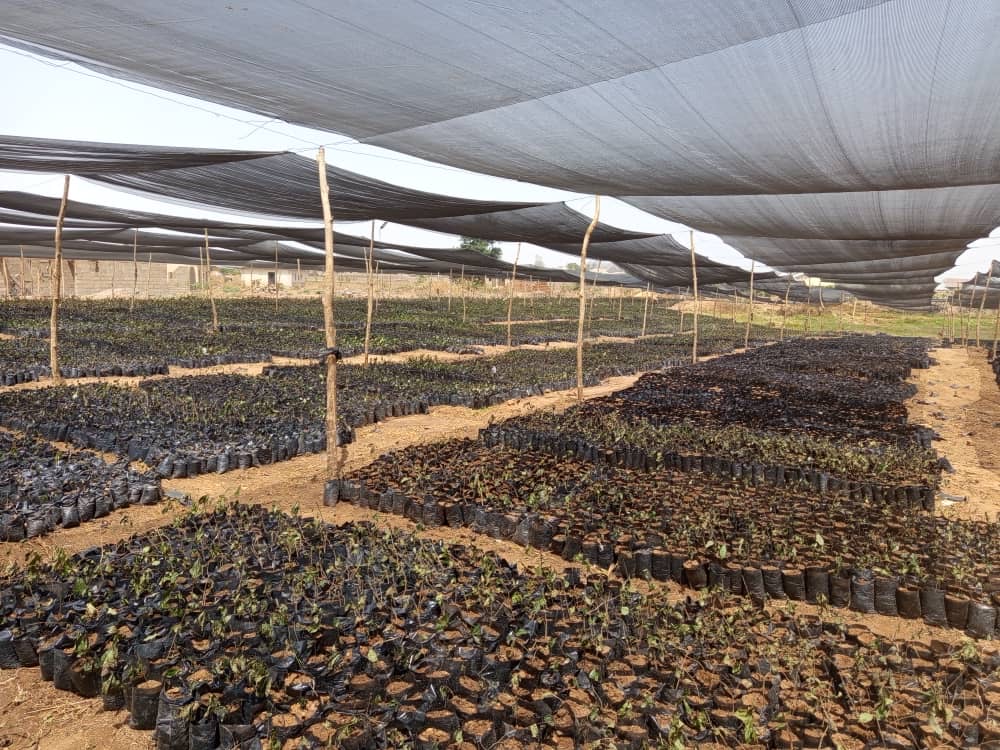
At the forefront of this transformation is Lingzhi Globe Coffee Farm, which has embraced greenhouse nursery technology and climate-resilient cultivation systems.
According to the Farm Manager, Engr. Charles Kaye, the company now raises coffee seedlings in green nursery farms located near rivers to ensure stable water supply while reducing pest infestation.
“These greenhouses help us regulate temperature, control humidity, and protect young coffee plants from harsh weather and destructive insects,” Engr. Kaye explained. “It has significantly improved survival rates and seedling quality.”
One of the major threats to coffee globally is the coffee borer beetle, a pest that burrows into coffee cherries and destroys the beans.
To counter this, Lingzhi Globe has introduced integrated pest management strategies, combining improved farm hygiene, controlled irrigation, and close monitoring to reduce infestations without heavy reliance on chemicals.
The impact of these solutions is already visible. The company is currently nurturing over one million seedlings at its Jos nursery, with four other nurseries of equal capacity spread across Plateau State.
Together, they form the backbone of an ambitious plan to cultivate five million coffee plants in the state this year.
Beyond boosting production, the initiative is also delivering economic and social dividends. Each nursery employs about 200 workers, while the main plantation in Heipang is expected to engage over 2,000 people, offering steady income and skills development for rural youths and women.
Looking ahead, the farm targets 2,000 tonnes of coffee annually, with plans to serve both local consumers and international markets.
The Farm Manager said discussions are ongoing with state and federal with the aim to expand export channels, improve quality certification, and attract foreign buyers.
For Engr. Kaye, the solution lies in collaboration, innovation, and sustained policy backing. “Climate change is real, but with the right technology, farmer education, and government support, coffee farming can thrive again in Nigeria.”
The support the revival of coffee production in Plateau state, the Nigerian Export Promotion Council (NEPC) in 2025 distributed improved coffee seedlings and organic manure to farmers across Plateau State.
The intervention is aimed at reviving abandoned plantations, encouraging new farmers, and rebuilding Nigeria’s export capacity.