
In a pointed response to Bayo Onanuga, Special Adviser to the President, Ose Anenih, son of the late Chief Tony Anenih, has issued a strong defense of his father’s role in the historic June 12, 1993, presidential election saga.
Ose described Onanuga’s account of his father’s involvement as “untrue” and criticized the use of “uncouth language” in an official communication from the Presidency to describe the former National Chairman of the Social Democratic Party (SDP).
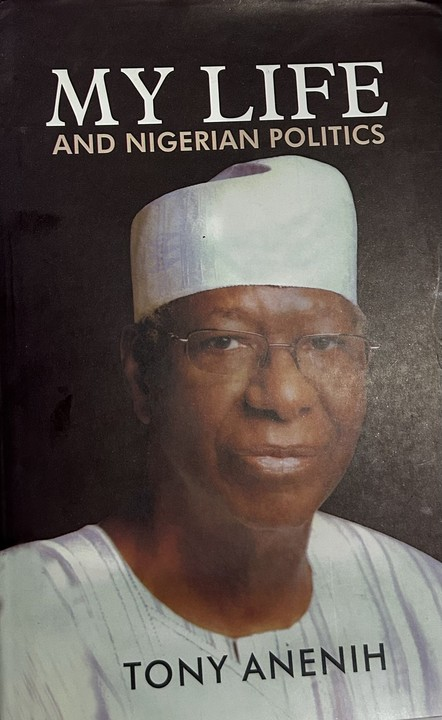
“I will rise above the emotional baiting and speak only to the truth,” Anenih stated, attributing Onanuga’s claims to ignorance rather than malice. He proceeded to clarify the historical record with details from his father’s accounts and memoir, *My Life and Nigerian Politics*.
Ose recounted that after the annulment of the June 12 election by General Ibrahim Babangida, Chief Moshood Abiola, the presumed winner, initially fled Nigeria. Upon his return, one of Abiola’s first visits was to Chief Tony Anenih in Benin City. There, Anenih publicly confronted Abiola, accusing him of abandoning the SDP and its supporters who risked their lives defending his mandate. Abiola’s response, according to Anenih, was cryptic: “A bird does not tell his friends that the stone is coming.”
Anenih further revealed a conversation in which his father warned Abiola against his growing ties with General Sani Abacha, cautioning that such dealings would jeopardize his chances of reclaiming his mandate. At the time, both the SDP and the National Republican Convention (NRC) had agreed to an Interim National Government (ING), which was expected to eventually hand over power to Abiola.
Ose noted that Abiola initially supported this arrangement, even reserving key ministerial portfolios for himself. However, growing impatient, Abiola pursued a different strategy.
According to Ose, his father said Abiola likened the ING to a “road trip” and Abacha’s military coup, which he publicly supported, to a “private jet.” Anenih highlighted that Abiola was among the first to visit and congratulate Abacha after the coup that ousted the ING, a move that Ose’s father had warned against.
Addressing claims about President Bola Tinubu, Ose clarified that his father never mentioned any animosity with Tinubu. In his 260-page memoir, Chief Anenih only noted Tinubu’s initial opposition to the delay in announcing the June 12 election results. Ose questioned Onanuga’s portrayal of Tinubu’s early visit to Abacha post-coup as a “mark of honour,” given Abiola’s role in supporting the ING.
Hon. Ose Anenih emphasized that many key figures from that era, including General Babangida, General Abdulsalami Abubakar, John Oyegun, Tom Ikimi, David Mark, Iyorchia Ayu, Dele Momodu, and Abiola’s son Kola, are still alive and can corroborate or clarify the events. He also pointed to his father’s memoir as a documented record of the period.
Expressing disappointment, Ose lamented the need to defend his father’s legacy against what he called a “lie” issued in the name of the President of Nigeria. “I had hoped that this level of toxicity left with the former occupant of your office,” he remarked, referring to Onanuga’s predecessor.
Ose offered to send Onanuga a copy of his father’s memoir to prevent future “ahistorical misadventures.” He questioned the relevance of revisiting a 30-year-old event, given the existential crisis facing the country caused by rising inflation, youth unemployment and deadly insecurity; urging the Special Adviser to the President on media and strategy, Bayo Onanuga to focus on the pressing duties of his office, such as offering condolences to victims of recent suicide bombings in Kano and Borno.
“I truly wish you had used your pen today to issue condolences rather than rewriting history and smearing the dead,” Ose concluded, signing off with “Love and light.”
Bayo Onanuga’s claim that Chief Anenih and Alhaji Sule Lamido as National Chairman and Secretary of the SDP “failed to oppose the military and wrote their names in the book of infamy by surrendering the people’s mandate without resistance”, triggered Ose Anenih’s pointed rebuttal.
