
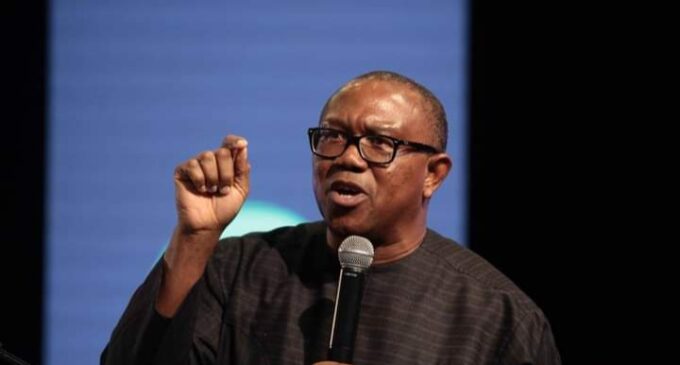
Peter Obi, the 2023 Labour Party presidential candidate, has warned that Nigeria is edging dangerously close to fiscal collapse if the President Bola Tinubu-led Nigerian government goes ahead with its plan to borrow about ₦20trillion to fund the 2026 budget.
Obi in a statement on Friday said the proposed borrowing is particularly concerning because debt servicing is projected to consume nearly half of the nation’s revenue while citizens continue to face insecurity, unemployment, and rising living costs.
He expressed concerns about the lack of transparency regarding revenue generated in 2025, noting that the government has yet to provide clear information on how these funds were used.
He asked specifically about the unaccounted revenues, saying “So, where are all the revenues that accrued in 2025, even when we were told that we had surpassed the revenue targets since August?”
Obi also criticised the pattern of borrowing, pointing out that the loans are not being directed to productive sectors of the economy.
He added that the country needs to stop unplanned and unexplained borrowing, saying “It is time for us to stop this fiscal rascality, especially with uncontrolled and unexplained borrowing that is not being invested in the productive sectors of our nation, but instead ends up in consumption.”
He stressed the importance of building sustainable economic growth through production, exports, and value creation, supported by strong institutions.
On Nigeria’s development strategy, Obi said “For years, I have consistently maintained that Nigeria cannot borrow its way into prosperity. Nations do not develop by consuming more than they produce. They develop by producing, exporting, and creating value, while building strong institutions that ensure accountability and efficient use of public funds.”
Obi also questioned the government’s claims of increasing revenue while raising borrowing levels simultaneously.
He said “We cannot tell Nigerians that revenue is increasing while simultaneously increasing borrowing to ridiculous historic levels. Governance must be built on transparency, not propaganda.”
He warned that if the current trajectory continues, it could have long-term effects on national debt and production levels.
He said “We cannot build a new Nigeria on the foundation of misleading figures, rising debts, shrinking production, and continuous hardship.”
Obi concluded by calling for urgent fiscal reforms, emphasising the need for a sustainable economic model.