
By Adewole Kehinde
“The pessimist complains about the wind. The optimist expects it to change. The leader adjusts the sails.” –John Maxwell
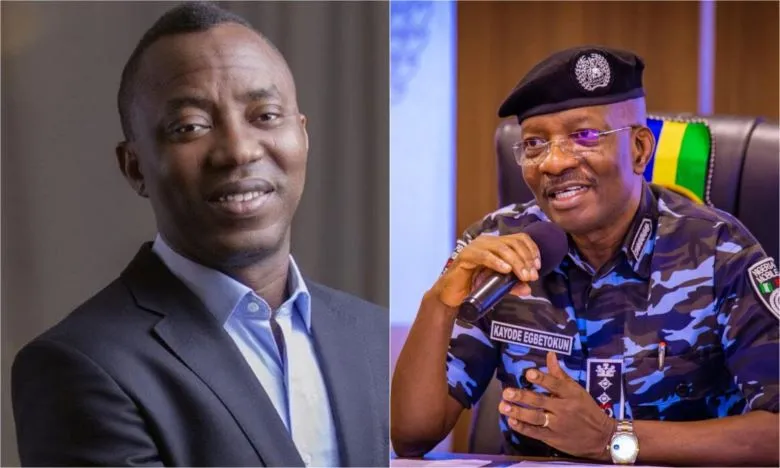
The recent outburst by Omoyele Sowore over the arrest of Sodeeq Atanda, a senior reporter with FIJ Nigeria, is yet another example of reckless commentary driven more by bitterness than by facts.
In his characteristic fashion, Sowore rushed to social media to cast aspersions on the Inspector-General of Police, IGP Kayode Adeolu Egbetokun, peddling the tired narrative of illegality, persecution, and abuse of power. Nothing could be further from the truth.
First, let it be stated clearly and unequivocally: IGP Kayode Egbetokun is not an illegal IGP. His appointment followed due process, constitutional provisions, and established norms within the Nigeria Police Force.
Repeating the word “illegal” does not make it so, and no amount of online noise can overturn the legality of a properly constituted office.
Equally false is the claim, explicit or implied, that the Nigeria Police under IGP Egbetokun collaborates with private interests to abduct families, terrorize citizens, or weaponize cruelty.
This is a grave accusation that Sowore throws around casually, without evidence, because outrage is his only remaining political currency.
The truth is that under Egbetokun’s leadership, the Police Force has been steadily refocusing on professionalism, accountability, intelligence-led policing, and respect for the rule of law.
Sowore’s dramatic assertion that the IGP has been “tracking him” since his arrival in Lagos is both laughable and self-important.
The reality is simple: Sowore is a political nobody whose relevance now exists mainly on social media timelines.
The Inspector-General of Police has far more pressing national security responsibilities than monitoring the movements of a perennial protester seeking attention.
Nigeria’s police leadership is focused on protecting lives and property, not indulging inflated egos.
Under IGP Egbetokun, the Nigeria Police Force has prioritised preserving law and order while simultaneously professionalising the institution.
From improved inter-agency collaboration to clearer operational guidelines and renewed emphasis on citizens’ engagement, the direction is unmistakable.
These reforms may not suit those who thrive on chaos and confrontation, but they serve the broader interest of Nigerians.
It is also important to state that the Nigeria Police Force is not designed to hasten the demise of President Bola Ahmed Tinubu’s administration, as Sowore and his cohort would like to suggest.
The Police exists to serve the Nigerian state and its people, irrespective of partisan fantasies. Attempts to drag the Force into political vendettas only expose the desperation of those who have repeatedly failed at the ballot box.
Sowore’s bitterness is understandable. As the Police progresses under IGP Egbetokun, becoming more structured, more professional, and more people-oriented, those who profit from disorder will naturally feel threatened. But progress does not wait for their approval.
Looking ahead to 2026, perhaps Sowore should prepare himself for a different kind of assignment: reporting on the fulfilment of IGP Egbetokun’s vision for the Nigeria Police Force, a professionally competent, people-friendly police service firmly driven by the rule of law.
That, ultimately, is the story that will endure long after today’s noise has faded.
Adewole Kehinde is a public affairs analyst based in Abuja. 08166240846. kennyadewole@gmail.com @kennyadewole