
….. By Comrade Olufemi Lawson
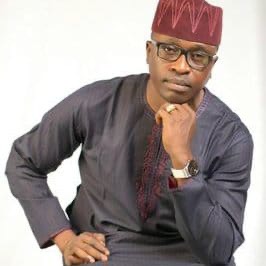
In an era when public confidence in elected representatives is increasingly measured by what citizens can see, touch and benefit from, the political career of Hon. Kehinde Olaide Joseph, popularly known as KJ, presents an interesting case study in grassroots representation.
Representing Alimosho Constituency II in the Lagos State House of Assembly, Joseph is now seeking a third term. Available records show that his case is not merely one of political continuity. It is also an argument about experience, legislative capacity, constituency intervention, youth development and the value of retaining lawmakers who have acquired institutional knowledge of the workings of government.
For KJ, His political experience, however, predates his election to the Assembly. He has previously served in various grassroots political and public-service capacities, including as a Special Adviser to the Lagos State Government on Civic Engagement and later on Housing. His background therefore combines party organisation, executive experience and legislative service.
In one of my conversations, with young people on Governor’s Road, in Ikotun, I came to realized that Honorable Joseph’s strongest argument for continuity may ultimately be found not in political rhetoric but in the range of interventions associated with his representation.
In presenting his first-term scorecard in 2023, Joseph listed several infrastructure interventions across the Alimosho area, including roads, bridges, drainage works and health-related projects. He attributed the facilitation of a number of these projects to collaboration with the Lagos State Government under Governor Babajide Sanwo-Olu. Among the roads and links mentioned were routes around Abaranje, Akesan, Ijegun, Ademoye and Onilewura.
Importantly, these should be understood as facilitated government projects rather than projects personally executed by a legislator. That distinction matters in assessing legislative performance. A lawmaker’s responsibility is principally legislation, representation and oversight, but effective constituency representation also involves identifying local needs, lobbying the executive and ensuring that government projects reach neglected communities.
That appears to have been one of Joseph’s approaches.
The Lagos State Government itself has documented major infrastructure improvements in the Alimosho axis. One such intervention was the Babafemi Dada Bridge and associated road network, which significantly improved connectivity between Ayobo, Igando and surrounding communities. Joseph was among the lawmakers who pushed and publicly commended the project.
Perhaps the most visible recent example of Joseph’s constituency-focused intervention is the development of Abaranje Secondary School.
In April 2026, Joseph facilitated and donated a well-equipped block of classrooms to the school, an intervention publicly commended by the Speaker of the Lagos State House of Assembly, Rt. Hon. Mudashiru Obasa. The Speaker described the project as an example of effective representation and community development, particularly because it directly addressed the educational needs of young people.
Reports from the commissioning also described the school as the first public secondary school serving the Abaranje community, making the intervention particularly significant for children who previously faced challenges accessing secondary education close to home.
Whatever one’s political affiliation, providing a permanent educational facility in a rapidly expanding community is the kind of intervention whose value can extend well beyond a single electoral cycle.
It is an investment in human capital.
Another defining feature of Joseph’s political profile has been his emphasis on youth empowerment.
In his 2023 scorecard, beneficiaries from Alimosho had participated in empowerment programmes supported through the Lagos State Employment Trust Fund, while his work as Chairman of the House Committee on Agriculture had also been used to promote agricultural entrepreneurship among young people.
He specifically cited beneficiaries who ventured into poultry and fishery businesses after receiving training, startup support and access to facilities. He also spoke of educational support, bursaries, assistance with university admission and employment-related interventions.
These records reveal a consistent philosophy: that constituency representation should not stop at political mobilisation but should include efforts to improve the economic prospects and welfare of ordinary residents.
Perhaps one of the more notable claims in Joseph’s representation was his assertion that beneficiaries of his interventions were not selected exclusively on the basis of party affiliation.
He programmes had benefited people irrespective of political party, tribe or religion and argued that public representatives should operate with a sense of equal citizenship.
That philosophy deserves emphasis in today’s Lagos.
Alimosho is one of the state’s most populous and politically significant areas, with an extraordinarily diverse population. The constituency requires representatives who can understand that political victory may be partisan, but governance must ultimately be inclusive.
Joseph’s evolution within the Assembly is also significant.
In the current 10th Assembly, he chairs the House Committee on Public Accounts, a position that places him at the centre of legislative scrutiny of public expenditure and government financial accountability. Recent reports have documented the Public Accounts Committee’s examination of reports relating to government ministries, departments and agencies.
That role is particularly important because Lagos is not merely another state. It is Nigeria’s largest economic centre and one of Africa’s most consequential subnational economies.
A lawmaker who understands public accounts, budgeting, executive administration and grassroots needs can potentially contribute beyond the narrow interests of his constituency.
Indeed, Joseph’s intervention during discussions around government appointments also illustrates his willingness to participate in wider questions of representation and governance. Reports from the Assembly have quoted him on the need for party members and loyalists to receive consideration in government appointments.
The argument for Joseph’s reelection should therefore not simply be that he has been in office for eight years.
Longevity alone is not an achievement.
The stronger argument is continuity with experience.
A third-term legislator enters the Assembly with institutional knowledge that a first-time lawmaker does not possess. He understands the legislative process, knows the ministries and agencies that must be engaged to deliver constituency projects, understands the politics of the Assembly and has established relationships across the executive and legislative arms of government.
If Alimosho Constituency II gives Joseph another mandate, the conversation should not end with reelection.
There should also be a serious conversation about whether a legislator with his experience should be considered for a principal leadership position in the Lagos State House of Assembly.
Such consideration should not be interpreted as a reward for political loyalty. It should be based on competence, legislative experience, institutional knowledge, capacity to build consensus and demonstrated commitment to public service.
A principal position would give Joseph a larger platform from which to influence legislative priorities affecting the entire state.
His experience in civic engagement could be deployed toward improving citizen participation in governance. His background in housing and grassroots politics could inform policies addressing Lagos’ housing deficit. His agricultural experience could contribute to food security and urban agriculture. His current experience in public accounts could strengthen legislative oversight and fiscal responsibility.
Most importantly, his grassroots experience could help bridge the frequently criticised gap between policy-making at Alausa and the realities confronting residents in communities such as Alimosho, Ikotun, Idimu, Egbe-Idimu, Abaranje and surrounding areas.
The ultimate test of Hon. Joseph’s next political chapter should therefore be whether he can transform constituency experience into statewide legislative influence.
Lagos needs lawmakers who understand that development is interconnected.
Roads affect commerce.
Education affects employment.
Youth empowerment affects security.
Public accountability affects infrastructure.
Housing affects urban planning.
Agriculture affects food prices.
And effective representation connects all of these.
A principal officer with this breadth of experience could champion stronger constituency-to-government feedback mechanisms, improved monitoring of constituency projects, more transparent oversight of public spending and legislative initiatives targeted at youth employment, education, skills acquisition and support for vulnerable residents.
That would be a natural progression from constituency politics to institutional leadership.
Hon. Kehinde Joseph’s record is not without the usual complexities that accompany public office, and claims of individual facilitation should always be distinguished from projects directly executed by government.
But the available evidence points to a legislator who has spent considerable political capital on infrastructure advocacy, youth empowerment, education, grassroots engagement and legislative oversight.
His 2026 classroom intervention at Abaranje, his earlier reported road, drainage, education, agricultural and empowerment initiatives, and his current role overseeing public accounts collectively provide a credible basis for arguing that his political value extends beyond simply occupying an Assembly seat.
The case for his reelection, therefore, should not be reduced to the familiar language of “four more years.”
It should be about what four more years can produce when experience is matched with greater responsibility.
If the people of Alimosho Constituency II renew his mandate and the leadership of the Lagos State House of Assembly considers him worthy of a principal position, Joseph would have an opportunity to move from being principally known as KJ of Alimosho to becoming one of the legislators helping to shape the broader governance architecture of Lagos.
That is where the real test begins.
And that is also where the greater value of continuity could ultimately be measured.
Kehinde Joseph’s next mandate should therefore be judged not only by what he has done for Alimosho, but by what his accumulated experience can contribute to the future of Lagos State.
Comrade Olufemi Lawson is the Executive Director, Centre for Public Accountability Lagos, He writes from Governor Road, Ikotun Lagos.