
By Golok Nanmwa, JOS
In a society where children and adults living with learning difficulties and intellectual and developmental disabilities often face discrimination, misunderstanding, social exclusion and inadequate support, the work of the Modupe Afiz Ogun Foundation is providing a compelling example of how compassion, advocacy and purposeful leadership can help transform lives.
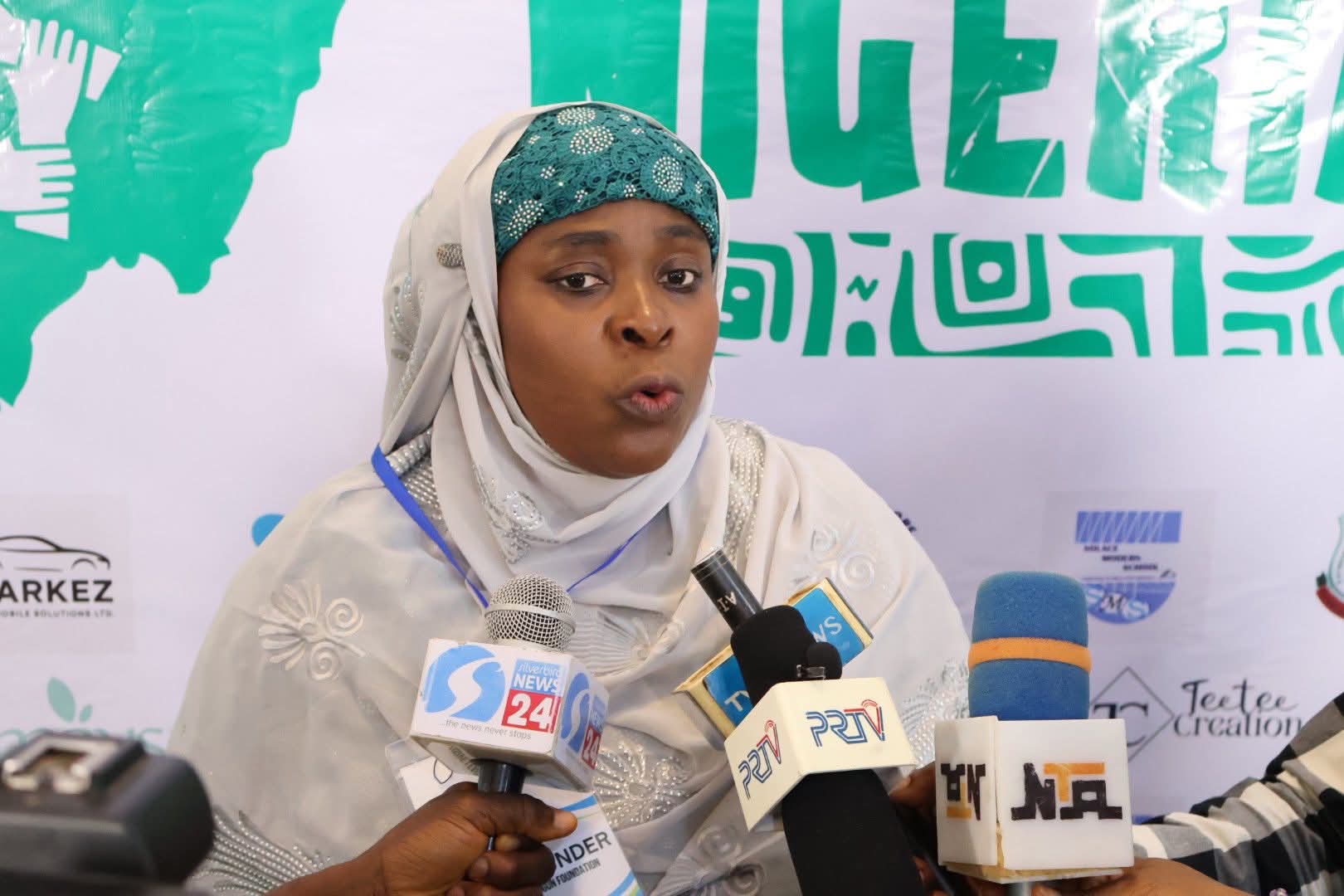
At the centre of this humanitarian initiative is Mrs Modupe Afiz Ogun, founder of the Modupe Afiz Ogun Foundation (MAF), a woman whose commitment to improving the lives of persons with special needs has continued to attract attention through advocacy, education, capacity building, family support and community engagement.
As the wife of the Director-General of the Industrial Training Fund (ITF), Dr Afiz Ogun Oluwatoyin, Mrs Ogun has demonstrated that meaningful contributions to society extend beyond official positions and public recognition.
Through her foundation, she has carved out an important humanitarian space, focusing on people whose challenges are frequently misunderstood or overlooked.
Her intervention is particularly significant in Nigeria, where awareness of learning disabilities and intellectual and developmental conditions remains limited in many communities, leaving affected children and their families struggling to access appropriate education, healthcare, professional guidance and social acceptance.
A mission driven by personal experience
What distinguishes Mrs Ogun’s advocacy is the personal experience behind her commitment.
As a mother of a neurodivergent child, she understands the emotional, educational and social challenges confronting families raising children with special needs.
Rather than allow those experiences to remain personal struggles, she has channelled them into a broader campaign for awareness, acceptance, inclusion and empowerment.
Through the Modupe Afiz Ogun Foundation, she is working to ensure that children and adults living with learning and intellectual developmental disabilities are recognised, respected and given opportunities to develop their abilities.
Her message is simple but powerful: having a disability does not diminish an individual’s worth, dignity, intelligence or potential.
This philosophy has become the foundation’s guiding principle, with its activities designed around the belief that every individual deserves an opportunity to learn, participate and contribute meaningfully to society.
Promoting inclusive education
One of the foundation’s major areas of intervention is education, particularly the need to equip teachers with the knowledge and skills required to identify and support children experiencing learning difficulties.
In September 2026, the foundation organised a three-day Teachers’ Professional Development Training for staff of the ITF Model School in Jos, Plateau State.
The programme focused on equipping teachers with practical strategies for identifying and supporting learners with specific learning disabilities and other educational challenges.
The training addressed important areas including screening tools, neurodiverse classrooms, multisensory teaching, targeted interventions, Individualised Education Plans and inclusive teaching strategies.
Declaring the programme open, Mrs Ogun emphasised that children should not be judged by the speed at which they learn or their ability to conform to conventional classroom expectations.
“Everybody can learn, that is a fact, but everybody does not learn the same way,” she said.
The initiative underscored her understanding that teachers are critical partners in identifying learning difficulties early and ensuring that affected pupils receive appropriate support.
By investing in teachers, the foundation is addressing an important part of the education system, recognising that an informed teacher can make a significant difference in the educational experience and future of a child with special needs.
Taking advocacy beyond the classroom
Beyond teacher training, Mrs Ogun has demonstrated a commitment to taking disability awareness to communities, schools and wider audiences.
The foundation’s programmes include awareness campaigns, school outreach, youth engagement, conferences and summits designed to promote understanding and challenge misconceptions about disabilities.
According to figures published by the foundation, its interventions include outreach activities involving more than 300 school engagements, over 500 NYSC-related outreach engagements and an inclusive leadership youth conference reaching more than 1,000 participants.
These activities reflect an effort to reach different categories of society, including young people, educators, parents, caregivers and community stakeholders.
The foundation also identifies learning conditions such as dyslexia, dyscalculia, dysgraphia, auditory processing disorders and language processing difficulties among the issues requiring greater public understanding.
It equally promotes awareness of intellectual and developmental conditions, including autism, attention-deficit/hyperactivity disorder, cerebral palsy and Down syndrome.
Through these interventions, Mrs Ogun is helping to change the narrative from discrimination and pity to acceptance, respect and the recognition of individual abilities.
Harnessing media for social change
Another important aspect of her work is the use of media and public communication to promote disability awareness.
The foundation runs awareness podcasts every Saturday at 3pm through its social media platforms, providing opportunities to educate the public, share experiences and discuss issues affecting persons with special needs.
This media engagement is particularly important because many families lack access to reliable information about learning disabilities and developmental conditions.
Mrs Ogun has also been associated with the radio awareness initiative, “Ability Inside Disability”, launched in Jos to make information about dyslexia and related conditions more accessible to the public.
The use of accessible communication platforms demonstrates her understanding that meaningful advocacy must go beyond conferences and formal gatherings.
It requires sustained conversations that reach ordinary families, schools, communities and people who may not otherwise encounter information about these conditions.
Supporting families and caregivers
The foundation also recognises that the challenges of disability affect not only the individuals concerned but also their parents, siblings and caregivers.
Consequently, family support and counselling form part of its intervention programmes.
Through these initiatives, families are encouraged to understand the conditions affecting their loved ones, appreciate their abilities and provide the support necessary for their development.
This is particularly important in communities where parents sometimes experience isolation, stigma or uncertainty because they do not know where to obtain professional guidance.
The foundation’s approach recognises that empowering a child also requires strengthening the family environment in which that child grows.
Mrs Ogun’s humanitarian vision also places emphasis on healthcare support and early intervention.
The foundation identifies assessment, early intervention and ongoing therapy as important components of its programmes.
These interventions are intended to help individuals improve their daily functioning, communication, learning abilities and independence.
Its professional team includes a consultant cardiologist, a consultant neurologist and a speech therapist, alongside other personnel supporting its activities.
Our correspondent reports that the involvement of professionals reflects the importance of specialised knowledge in addressing the different needs of individuals with learning and developmental disabilities.
The foundation’s emphasis on early intervention is also consistent with Mrs Ogun’s repeated advocacy for timely identification of learning difficulties.
Her position is that children should not be allowed to struggle unnecessarily when appropriate assessment, understanding and support can help them make progress.
Skills development and economic empowerment
Another important dimension of the foundation’s work is vocational skills development.
Recognising that empowerment must extend beyond formal education, the organisation includes practical skills training among its intervention areas.
This approach is designed to promote independence, confidence and opportunities for employment among persons with special needs.
It also reinforces the understanding that individuals with disabilities should not be excluded from economic participation because of their conditions.
By promoting skills development, the foundation is advocating a society where people are judged by their abilities and given opportunities to contribute productively.
Building partnerships and extending its reach
The foundation’s advocacy has also extended beyond Nigeria, with its founder’s awareness and inclusion engagements spanning countries including The Gambia, South Africa, the United Arab Emirates and Germany.
The foundation’s activities also align with the United Nations Sustainable Development Goals, particularly Goal 3 on good health and well-being, Goal 4 on inclusive and equitable quality education, and Goal 8 on decent work and economic growth.