
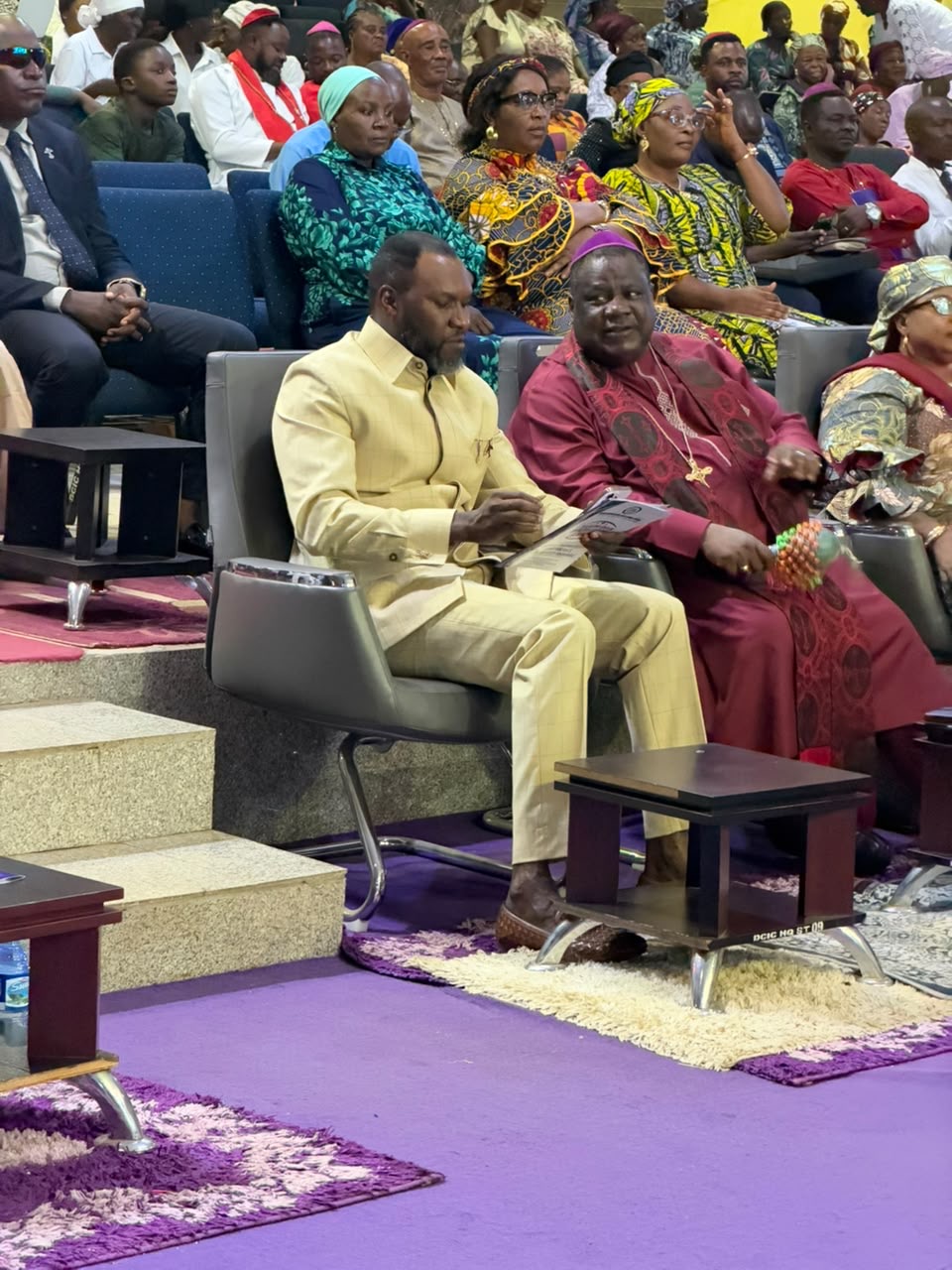
The National Director of Special Duties of the City Boy Movement, Isaac David Balami, has urged Christian leaders, traditional rulers and other religious stakeholders to actively participate in politics and mobilise support for President Bola Tinubu’s re-election in 2027.
Balami made the call while addressing Christian and religious leaders in Abuja, where he stressed the need for unity within the Body of Christ and greater political engagement by the Church, particularly in Northern Nigeria.
He said Nigeria’s challenges were partly linked to the failure of the Christian community to remain united and take an active role in leadership and governance.
Quoting John 17:22 and the biblical injunction to maintain unity, Balami said one of Christ’s major messages to His apostles was the need for them to remain united.
He argued that the Church must correct past mistakes by taking a more active interest in political leadership rather than leaving the space to others.
“The missionaries taught us everything but failed to teach us leadership. The Church abandoned leadership, hence Agbero took over leadership, and that has to change,” he said.
Balami urged religious leaders to take the message of political participation and unity to the 19 Northern states, insisting that the Church had an important role to play in shaping the country’s future.
He, however, clarified that he was not at the gathering to defend the Tinubu administration or claim that everything was going well.
He acknowledged that the impact of government reforms was not always immediate, but argued that the administration had demonstrated fairness to different ethnic nationalities and shown concern for the plight of Christians in Northern Nigeria.
“Tinubu has neither told you that he is righteous. Why am I here to encourage the Church to wake up? It is because the impacts of reforms are not felt at once. It takes time,” he said.
The City Boy Movement director cautioned Christians against voting Tinubu out in 2027, warning that they could regret such a decision.
“We should not make a mistake as a Body of Christ to vote President Bola Tinubu out. We will regret it. I am not telling you this because I have been appointed by this government. I have not even gotten a contract from the government,” he said.
Balami further argued that Christian communities in Northern Nigeria had experienced marginalisation and exclusion in the past, including difficulties in securing university admission, employment and career advancement on account of their names.
In an interview with the Nigerian Television Authority, NTA, he said he believed the Tinubu administration was treating citizens as Nigerians rather than discriminating against them on religious or ethnic grounds.
He also warned against what he described as the tendency of some political actors to court Middle Belt communities during elections and abandon them afterwards.
Balami recalled that during the 2023 general election, some political leaders received considerable support from Northern communities but failed to reflect that support in subsequent party appointments and distribution of political opportunities.
He said the time had come for Middle Belt leaders and younger generations to demand fairness, inclusion and equal opportunities in national affairs.
He cited recent engagements between prominent Middle Belt leaders, including General Theophilus Danjuma, former Speaker of the House of Representatives Yakubu Dogara and other stakeholders, with the Minister of Defence and President Tinubu, describing them as a sign that the region was determined to demand change.
“Baba TY Danjuma, with Yakubu Dogara, my big uncle Thomas Etu, with the Minister of Defence and Middle Belt leaders, have spoken to the President, and they are saying enough is enough. We, the children, are equally saying enough is enough,” he said.
The IBUAM Founding Chancellor also called on wealthy Christians to embrace generosity and use their resources to improve the lives of less privileged people rather than concentrating wealth within their immediate families.
He urged believers not to depend entirely on government intervention, stressing that individuals blessed with resources had a responsibility to support their communities.
“If God has blessed you, bless others. As believers, we should not be selfish. We should not wait for the government to do everything,” he said.
Using his community of Shaffa as an example, Balami challenged affluent Nigerians to invest in the welfare and education of disadvantaged people, reeling off his investment in his community.
He also acknowledged the presence of the Esu Karu at the gathering and appreciated Kaduna State Governor, Uba Sani, for sending a llrepresentative.
Balami equally thanked Seyi Tinubu for his interest in strengthening engagement with Christian leaders, saying the President’s son had indicated his intention to encourage him to deepen his engagement with the Body of Christ.