
The Industrial Training Fund, ITF, has disclosed that it has committed over N700 million to the international certification of more than 7,000 Nigerian artisans under the Federal Government’s Skill-Up Artisans, SUPA, programme.
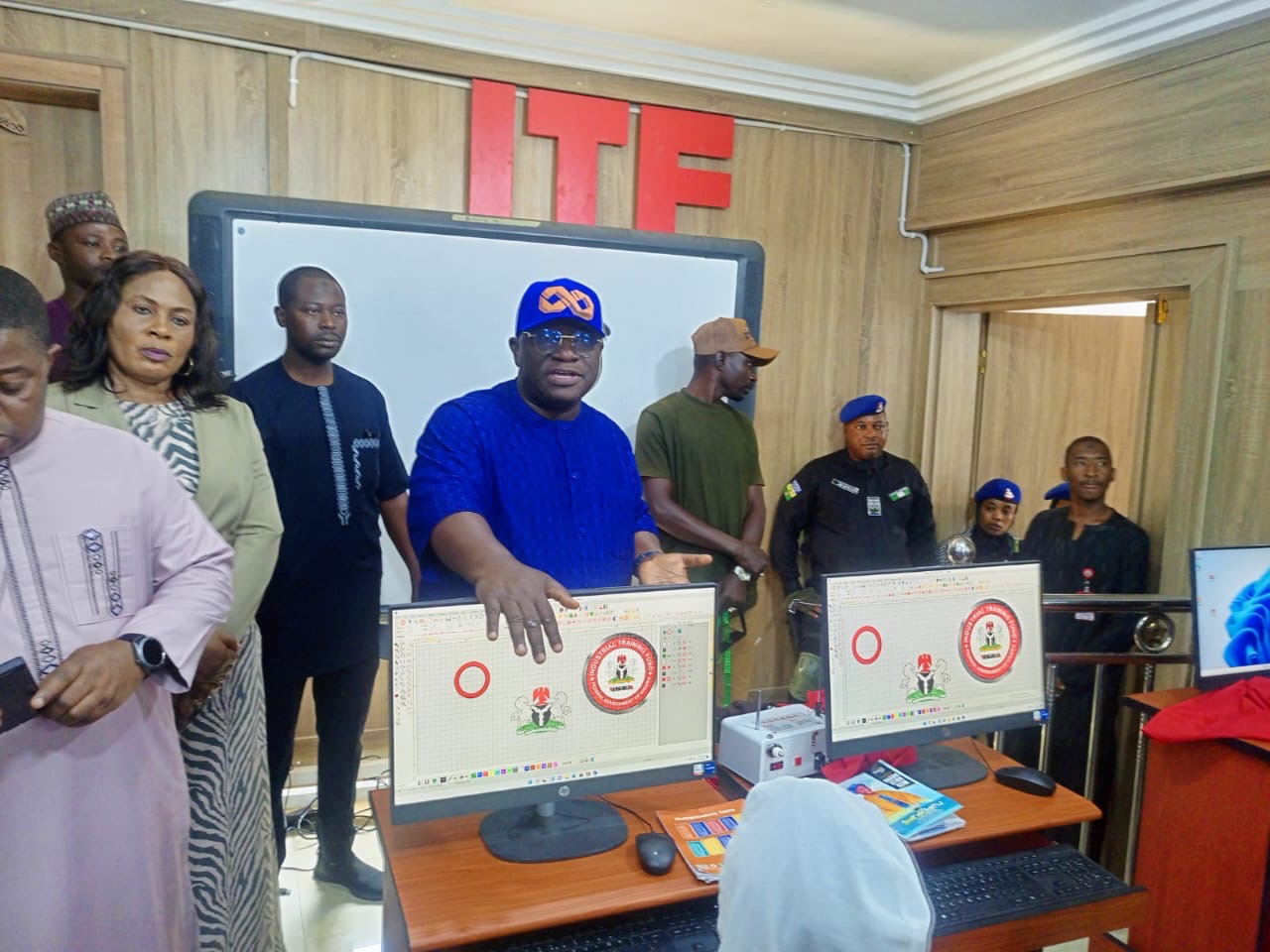
The Director-General and Chief Executive Officer of ITF, Dr Afiz Oluwatoyin Ogun, disclosed this on Monday while monitoring the ongoing international certification examination at the ITF Centre of Excellence in Jos, Plateau State.
Ogun said the examination was being conducted across 27 states and 28 examination centres, marking a major expansion of the international certification component of the SUPA programme after an earlier pilot exercise in Abuja involving more than 200 artisans.
The ITF boss said the initiative was aimed at changing the narrative around Nigerian artisans by equipping them with internationally recognised qualifications that would enable them to compete for jobs and business opportunities both within Nigeria and abroad.
He said the Federal Government was determined to ensure that Nigerian artisans no longer remained disadvantaged in the global labour market because of a lack of recognised certification.
According to him, the international examination was being conducted by Alberk QA Technic of Türkiye, while the ITF was also working towards exposing beneficiaries to other international certification bodies.
Ogun said: “We promised Nigerians that Nigerian artisans will have an opportunity to have a bouquet of certification.
“We have ProQual coming in, GQA coming in and City & Guilds coming in. All these examinations, they will have the opportunity to write them, and this does not come cheap.”
He explained that beneficiaries would also retain Nigeria’s National Skills Qualification Framework, NSQF, certification, stressing that combining local and international qualifications would significantly improve the credibility and mobility of Nigerian artisans.
“When you have combined qualifications, anybody knows that when you have combined qualifications, it is better than just a single qualification,” he said.
Ogun said the international certifications could become particularly important for artisans seeking opportunities in countries where Nigeria’s local certification might not be recognised.
He said: “NSQF, supported by all these international certifications, can take you anywhere in the world.”
If somebody says they don’t recognise NSQF, they recognise City & Guilds; you have City & Guilds. If they recognise Alberk QA Technic, you have that.”
The ITF DG said the programme was also designed to address the growing presence of foreign artisans in Nigeria, noting that workers from smaller countries were increasingly taking advantage of opportunities in Nigeria because of their skills and certification.
He said the solution was not to shut out foreign workers but to ensure that Nigerian artisans were adequately trained and certified to compete with them.
Ogun said the current beneficiaries were genuine practising artisans who had undergone screening, stressing that the programme was not designed for people who merely wanted to collect stipends.
He explained that some applicants were screened out because they could not demonstrate that they were practising artisans.
“We are scaling up Nigerian artisans to international standard. We are not just bringing in artisans.
We are trying to separate the quacks from those who are properly trained and make them better,” he said.
The ITF boss said the beneficiaries were also being trained in areas beyond their technical trades, including occupational ethics, industrial safety, project management and patriotism.
He said this was necessary because technical competence without professionalism could undermine the reputation of Nigerian artisans.
Ogun cited the attitude of some artisans who fail to deliver jobs at agreed times as one of the problems the programme was designed to address.
According to him, the SUPA programme is therefore not merely about issuing certificates but about producing artisans who can meet international standards in technical competence, safety, ethics and customer relations.
He said the international certification exercise was part of President Bola Ahmed Tinubu’s human capital development agenda and assured Nigerians that additional batches of artisans would be captured.
“This is the first batch. More will be called. More batches are ahead,” he said.
Ogun also disclosed that ITF was grooming young artisans and had extended the skills development initiative to young Nigerians in schools, with students being given opportunities to acquire practical skills alongside their formal education.
He said students participating in the programme would receive practical training in their chosen trades for about 13 hours weekly, including sessions after school and on Saturdays.
According to him, Junior Secondary School One students would spend two years acquiring skills before progressing to international certification examinations, while students at higher levels would continue to build on their existing qualifications.
He said the arrangement would enable a young person to leave secondary school with both academic and technical qualifications.
He said: “Imagine your child finishing university or finishing secondary school and having a certificate, City & Guild certificate, NSQF certification, all three.
“You will be happy because before he goes into the university , the child already has a job and is already helping to feed you in the house.”
The ITF boss stressed that the training was being provided free to beneficiaries, noting that the cost of training artisans to international standards was substantial.
He urged Nigerians to be patient with the programme, saying the Federal Government could not accommodate all applicants in one batch.
Ogun urged practising artisans who had not been captured in the current phase to await subsequent batches, while encouraging Nigerians to take advantage of the skills development opportunities being provided by the government.
He said the ultimate objective was to produce a new generation of Nigerian artisans who would not only be competent in their trades but would also possess qualifications capable of opening doors to opportunities across the world.