
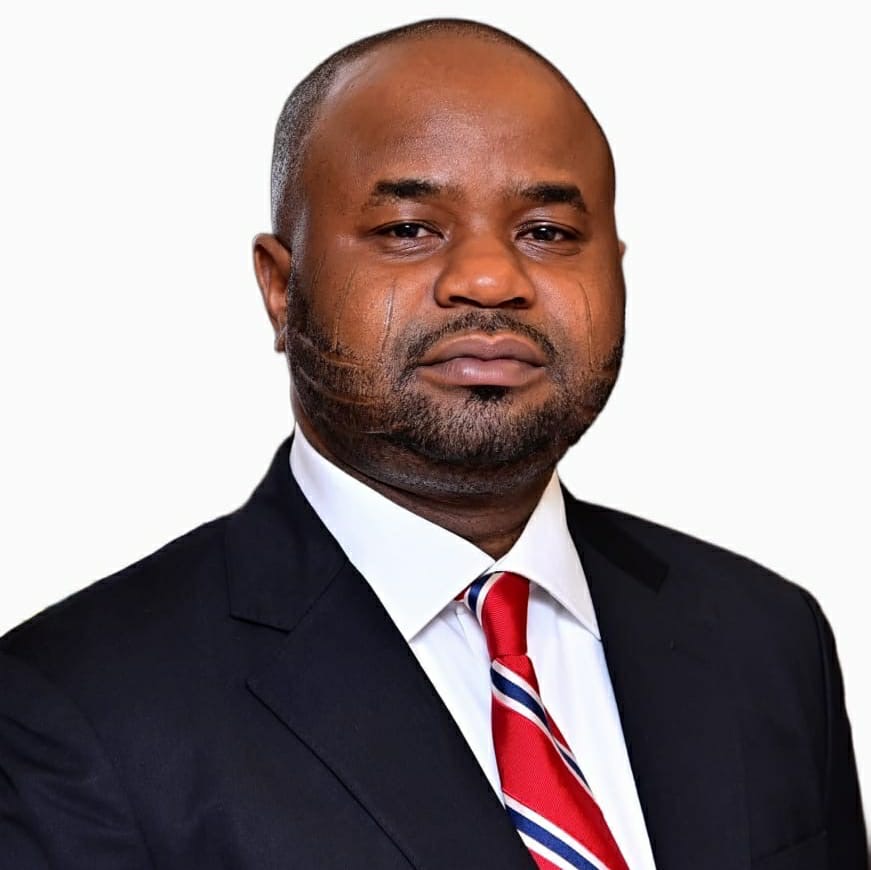
By Mayegun G. Oloriegbe, JP
The latest campaign of calumny against the President Bola Ahmed Tinubu, GCFR reelection bid, purporting to unearth a “#23.8 billion spending spree” by Dr. Zacch Adedeji must be received with far greater restraint than its lurid headline invites.
Scrutiny of public funds is not only legitimate; it is a civic duty. Every public officer, regardless of political colouration, owes the Nigerian people a transparent account of the resources entrusted to him.
Accountability, however, is not achieved by converting an agency’s collective expenditure into a personal indictment of its chief executive and then releasing the product into the feverish atmosphere of a campaign season. The central question remains stubbornly unanswered: where is the evidence that Dr. Zacch Adedeji personally appropriated, received, or diverted #23.8 billion?
What has been published is, on the face of it, an aggregation of institutional outlays under several budget heads; training, domestic and foreign travel, meetings and retreats; thereafter attributed, by a remarkable analytical leap, to the Chairman in his private capacity.
An agency’s expenditure is not, by that mere fact, the personal expenditure of its head. To insist otherwise is to collapse the distinction between institutional stewardship and personal enrichment, an elementary distinction that serious public discourse cannot afford to abandon.
If any specific transaction is alleged to have been unlawful, unauthorised, inflated, fictitious, procured in breach of due process, or converted to private use, then the responsible course is clear: identify the transaction, the approving authority, the beneficiary, the procurement trail, and the documentary proof of the alleged breach. Anything short of that is not accountability; it is political theatre dressed in the language of public interest.
The timing, too, is instructive. Nigeria is sliding into an increasingly charged political season. Dr. Zacch Adedeji is no faceless public servant. He is a visible and articulate champion of the revenue and economic reforms of the Tinubu administration. That visibility makes him a convenient target.
Criticism is legitimate. A coordinated effort to destroy the reputation of a public servant through inadequately contextualised figures and suggestive headlines is an entirely different enterprise. When the publication itself describes the matter as an “ongoing investigation,” it inadvertently confesses the essential point: an allegation under investigation is not a finding of guilt. Dr. Adedeji is entitled to be judged on established facts, not on the rhetorical velocity of a headline timed for maximum political impact.
On the questions of training and travel, a modern revenue authority is, by its very nature, a knowledge-intensive institution. Continuous professional development, international engagement, technological competence, transfer-pricing expertise, digital taxation capacity and exposure to global best practice are not luxuries; they are operational necessities. Training expenditure is not, in itself, evidence of waste. Official travel is not, in itself, evidence of extravagance. The proper inquiry is whether the expenditure was budgeted, authorised, properly procured, incurred for official purposes and duly accounted for. If those requirements were met, the mere size of the aggregate does not magically transmute into misconduct.
The same logic applies to management retreats: their legitimacy or otherwise turns on purpose, cost, participants, process and measurable institutional outcome – not on the political convenience of the number attached to them. Numbers stripped of context can be made to serve almost any partisan narrative.
The so-called “security vote” allegation demands documentary clarity rather than sensational shorthand. If #140 million was expended under a budgetary head described as “security,” the questions that matter are precise: What was the exact budget head? What was its legal foundation? Who authorised the outlay? For what concrete purpose was it incurred? Was it properly accounted for? It is neither serious nor honest simply to equate an agency line item with the discretionary security votes historically associated with state governors and then leap to an inference of illegality. If the law has been breached, let the competent auditing or investigative authority establish that breach from the underlying records. That is how a mature democracy conducts accountability, not through insinuation and timed leaks.
There is another side of the ledger that must not be airbrushed out of the conversation. Under Dr. Adedeji’s leadership, Nigeria’s revenue administration has undergone significant institutional transformation, culminating in the establishment of the Nigeria Revenue Service under the 2025 legislation. The Service has pursued, and reported, substantially higher revenue performance. Official disclosures at the NRS management retreat in February 2026 confirmed that the agency collected #28.3 trillion in 2025, surpassing its #25.2 trillion target by approximately 12 per cent and representing a roughly 30 per cent increase over the previous year, while the Federal Government has set an ambitious #40.71 trillion collection target for 2026.
These achievements do not place any official beyond scrutiny. Neither, however, should selective allegations place the public beyond the obligation to weigh expenditure against performance. A fair assessment examines both sides of the account: what was spent and what was delivered.
It is entirely proper for opposition voices to challenge the policies of the Tinubu administration and to question the performance of those associated with it. But when the focus repeatedly settles on individuals who have become prominent advocates of the administration’s economic agenda, discerning Nigerians must distinguish between genuine accountability and political demolition. Dr. Zacch Adedeji does not deserve defence because he supports President Bola Ahmed Tinubu. He deserves defence because every citizen, especially a public servant, is entitled to due process, evidence-based criticism, and the presumption that an allegation remains precisely that until properly established.
However, the character of those making these allegations is also relevant to the weight the public should attach to them. Someone like Senator Dino Melaye, an unstable and rambunctious public figure and a political agbero, is hardly a model of measured or temperate political discourse. His public career has been defined, to a considerable extent, by volatility, theatricality, relentless provocation and a taste for political grandstanding. His interventions are often delivered with the kind of combative flamboyance designed to generate headlines rather than illuminate complex issues. Such character-driven, filthy criticism should not be elevated into established facts merely because it has been loudly or dramatically presented. In matters involving billions of naira and the reputation of a public officer, the country deserves more than the political equivalent of street-corner combat: it deserves evidence, documentation and sober analysis. A nation serious about accountability must learn to distinguish between a genuine whistleblower exposing wrongdoing and a perennial political provocateur seeking another opportunity to dominate the public conversation.
A compilation of institutional expenditure followed by its personal attribution to the head of the institution is not, by itself, proof of corruption. Nigeria deserves accountability. Nigeria also deserves intellectual honesty. In the emerging political contest, the country must resist the temptation to allow legitimate scrutiny of public officials to become a convenient instrument for destroying the reputations of those who occupy politically consequential positions.
Mayegun G. Oloriegbe, JP, is the Convener of The Progressive Counsel. He writes from Akure, Ondo State