
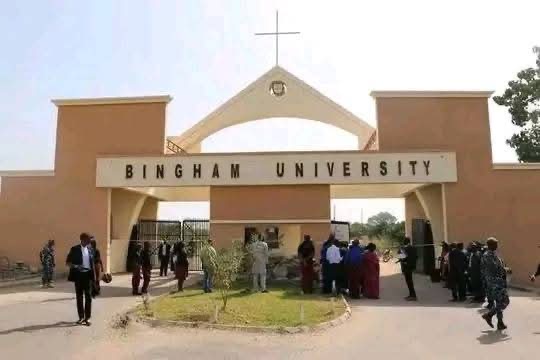
The Bingham University College of Medical Sciences has graduated 911 doctors since its establishment 20 years ago, the Provost of the College, Prof. Haroun Omeiza Isah, has disclosed.
Isah, who made the disclosure while presenting a paper at the 20th anniversary celebration of the College, said the institution had recorded significant growth in medical education, clinical training, research and community health services since it commenced operations in 2006.
“Bingham University was established by the Evangelical Church Winning All, ECWA, in 2005 and commenced operations in 2006, with the College of Medical Sciences among the pioneer colleges,” Isah said.
“The College initially took off at the temporary site of the ECWA Theological Seminary in Jos before moving to the permanent campus in New Karu, Nasarawa State, while retaining a dual-campus model in which preclinical training takes place in New Karu and clinical training is undertaken in Jos,” he said.
“Following the development of the clinical training framework and the upgrade of ECWA Evangel Hospital to Bingham University Teaching Hospital in 2010, the College was able to strengthen its clinical training in areas including Surgery, Internal Medicine, Paediatrics, Obstetrics and Gynaecology, Community Medicine, Psychiatry and Ophthalmology,” Isah said.
“The Teaching Hospital has also built significant capacity in infectious disease management, including its role in Lassa fever response. The Pinneo Infectious Disease Centre, which has a historic connection with the first documented Lassa fever encounter in Nigeria, was transformed by the hospital in collaboration with the Nigeria Centre for Disease Control and Prevention into a dedicated Lassa Fever Treatment Centre,” he said.
“Beyond Lassa fever, the hospital and the College have also contributed to the management of other infectious diseases, including HIV, COVID-19 and Mpox, while developing facilities and expertise to respond to viral haemorrhagic fevers and other emerging health challenges,” Isah added.
“By 2014, the clinical training framework had become fully integrated, and following regulatory accreditations by the National Universities Commission and the Medical and Dental Council of Nigeria, the College conducted its first medical induction in 2015 with 19 pioneer home-grown doctors,” he said.
“As at today, the College has turned out a total of 911 medical graduates, many of whom are contributing to healthcare delivery in Nigeria and beyond,” Isah said.
“The College has also diversified its programmes to include Nursing, Medical Laboratory Science, Radiography, Optometry, Human Anatomy, Physiology and Public Health, while postgraduate programmes have expanded to include Masters and PhD programmes in Basic Medical Sciences, as well as postgraduate programmes in Public Health,” he said.
He said the College was looking ahead to further expansion in infrastructure, technology and research, including the use of artificial intelligence in medical research, development of a Clinical Skills Laboratory, staff capacity building and stronger international research partnerships.
“We are also looking at the establishment of a Centre for Global Health Research and Development and strengthening partnerships with institutions such as the University at Buffalo and Sumy State University,” Isah said.
On the anniversary, the Deputy Provost of the College and Chairperson of the Central Planning Committee, Prof. Joy Shuaibu, said the celebration was primarily an opportunity to thank God for the College’s 20-year journey.
“Twenty years is a significant milestone, and we are grateful for how far the College has come,” Shuaibu said.
The Secretary-General/Director-General of the Christian Health Association of Nigeria, CHAN, Dr. Suleiman Mshelia, in his public lecture titled, “Christian Medical Education and the Future of Health Care in Nigeria,” congratulated the College for reaching the 20-year milestone.
“Twenty years is evidence that a vision has endured. The doctors who graduated from this College years ago are now consultants, public health physicians, hospital managers and lecturers,” Mshelia said.
“Christian medical education is not simply about producing people who can diagnose disease and prescribe treatment. It is about forming professionals who understand medicine as a calling to serve humanity,” he said.
“CHAN was established in 1973 and today has more than 700 member institutions, demonstrating the significant contribution of Christian health institutions to healthcare delivery in Nigeria,” Mshelia said.
“The health system is facing a serious workforce crisis. We are losing doctors and other health professionals to migration, while the number of resident doctors available to provide specialist training and services is also declining,” Mshelia said.
“We must therefore strengthen primary healthcare, improve working conditions, create meaningful postgraduate opportunities and develop policies that will make it possible for health professionals to remain and serve in Nigeria,” he said.
“Christian medical education must therefore prepare students not only to become competent professionals, but also to understand the dignity of every patient, practise integrity even when nobody is watching, provide whole-person care and give attention to neglected communities,” he said.
“We must train our students on the realities of Nigeria, make service possible through fair remuneration and career pathways, place public health and primary care at the centre of training, strengthen teamwork, develop responsible leaders and invest in research that addresses Nigerian problems,” Mshelia said.
“To the students, leaving Nigeria is not necessarily failure, but staying and serving here can also be a high ambition. What matters is that wherever you find yourself, you pursue excellence, honesty and equal care for every patient,” he said.
Mshelia urged the College to remain committed to its Christian identity and use the next 20 years to deepen its contribution to healthcare, education, research and service to humanity.