
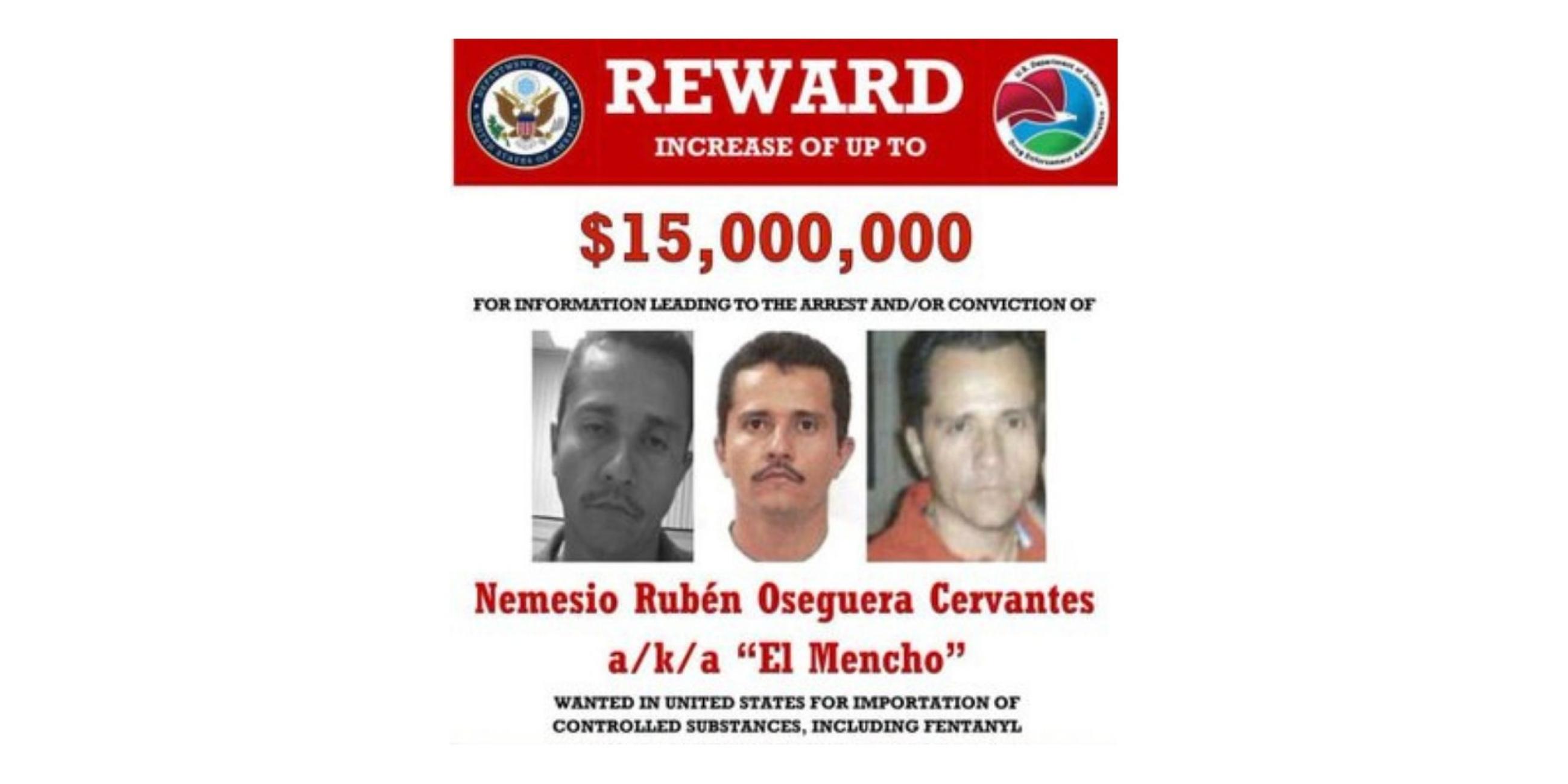
The Mexican government has announced the killing of Mexico’s most wanted cartel leader, Nemesio Oseguera Cervantes, popularly known as “El Mencho,” in what authorities described as a major security breakthrough in the country’s escalating war against organised crime.
Oseguera, the feared head of the Jalisco New Generation Cartel (CJNG), was killed on Sunday during a security operation in Tapalpa, a town in Jalisco state, according to Mexican officials.
Details of the operation were still being withheld as of press time.
New York Times reports that El Mencho had long been regarded as one of Mexico’s most violent and powerful drug traffickers. Under his leadership, the CJNG expanded aggressively over the past decade, building a criminal empire spanning drug production, trafficking, extortion and armed territorial control.
The cartel became notorious for brazen attacks on security forces and coordinated campaigns of terror in multiple states.
However, hours after the announcement of his death, violence erupted across at least five Mexican states.
Residents reported vehicles set ablaze and used to block major highways, a tactic frequently deployed by cartels to paralyse cities and signal retaliation.
In Jalisco, authorities suspended public transportation services in several areas and urged residents to remain indoors. Some of the unrest was reported in Guadalajara, the state capital and one of Mexico’s largest cities.
Security analysts warn that Oseguera’s death, while symbolically significant, could trigger a fresh wave of bloodshed as rival factions scramble for control within the CJNG and competing cartels attempt to seize territory.
Similar high-profile takedowns in the past have often resulted in fragmentation and intensified violence rather than immediate stability.
The killing also carries geopolitical implications.
U.S. President Donald Trump has repeatedly pressured Mexico to intensify its fight against drug cartels, at times threatening unilateral military strikes on Mexican soil if stronger action was not taken.
Mexico’s President Claudia Sheinbaum has rejected any suggestion of U.S. military intervention, describing such proposals as violations of national sovereignty.
Nevertheless, her administration has expanded intelligence and security cooperation with Washington amid growing bilateral tensions over fentanyl trafficking and border security.
The CJNG has been a major supplier of synthetic drugs, including methamphetamine and fentanyl, to the United States, contributing to a worsening opioid crisis north of the border.
The U.S. had earlier offered a $15 million reward for his capture.
While the Mexican government is expected to provide further details about the operation, the immediate aftermath suggests that the country could face renewed instability in the coming days.